Corrosion Passivation
Ballast tanks, peaks and double-bottoms.
Ballast tanks, voids, peaks and double-bottoms are difficult to access, have hard to reach cuts and corners and are therefore difficult to protect against corrosion. Especially for these application, we’ve developed nC Corrosion Passivator Fluid.
Benefits:
Minimal surface preparation
Application on wet and dry surfaces
Single-coat application
Free from solvents and heavy metals
Easy spot repair


Technology

Direct-to-rust solution
nC Corrosion Passivator Fluid is developed to passivate metal in hard-to-reach areas such as ballast water tanks, voids, peaks, and double bottoms. Minimal surface preparation is required—high-pressure washing is sufficient—saving time and costs by eliminating the need for blasting and waste handling.
How it works
nC Corrosion Passivator Fluid can be poured directly into your ballast tanks. Because the Fluid is lighter than water, simply filling the tank with ballast water will “lift” the Fluid and spread it over the metal surface. The active anti-corrosive component then bonds chemically into the metal. Floating is an effective and fast process to achieve complete coverage, even in practically inaccessible areas.
After treatment, the metal is protected against corrosive influences such as heat, moisture, salt and/or oxygen.
No sanding or blasting required
Corrosion Passivator can be applied direct-over-rust, effectively preventing the need for time-consuming and costly sanding or blasting procedures.
Stop corrosion chemically
Our Corrosion Passivator particles form electron pairs with the metal, preventing further oxide bonds and thus stopping the corrosion process, even in salt water.
Chemical bonding
Our products bind chemically to the surface through a sol-gel technique, creating a molecular-level bond. This connection is robust and requires less surface preparation, compared to traditional coatings.
Application by floating
Step 1: Preparation of confined spaces
Remove any loose rust, paint and mud from the tank. Blasting, chipping or sanding rusty surfaces is not necessary but can be done if a sleek result is desired. The surface may be either dry or wet. Heating or drying of the surface is not necessary.
Step 2: Distribute the Fluid over the tank
Distribute the nC Corrosion Passivator – Fluid between the frames at the bottom of the tank for optimum distribution over the tank surface (1 L / m3). Use 2 cycles from full to empty in case of very heavy corrosion or spray, roll or brush heavily corroded parts prior to floating.
Step 3: Filling the tank
Fluid floats on water. By filling the tank, the Fluid adheres to the metal. Both fresh and salt water can can be used. In case of external filling, keep the hose as deep as possible in the tank for a quiet flow and make sure that the filling rate does not exceed 20 cm per minute. Fill the tank to the maximum level so that the entire tank top is reached.
Step 4: Emptying the tank
When emptying the tank: ensure that the water level does not drop faster than 20 cm per minute. Ensure that the final segment of discharged water is collected and appropriately disposed of according to applicable regulations.
Step 5: Checking the tank
After emptying the tank, the entire surface is covered with Fluid and the color of the metal will change into anthracite or deep purple. This makes the inspection of the tanks easy. The Fluid serves as a carrier to bring the corrosion passivating particles to the metal and disappears by retraction and evaporation.
For a complete picture, watch the application video for our floating solution ⇢
Projects
Discover how our nC Corrosion Passivator products offer a solution to our customers.
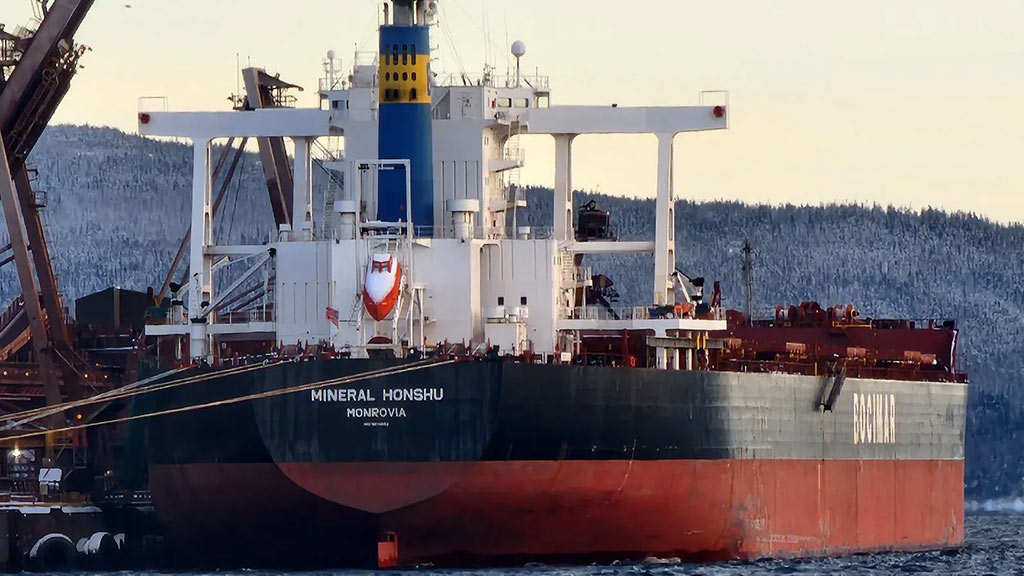
Bocimar
Mineral Honshu – Bulk Carrier
On the bulk carrier M.V. Mineral Honshu, the crew applied nC Corrosion [...]
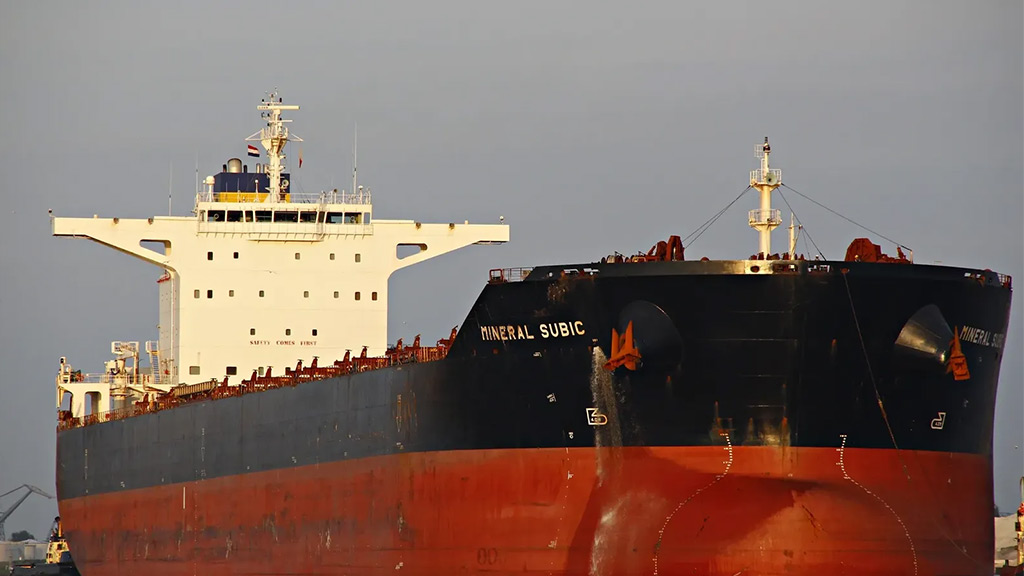
Bocimar
Mineral Subic – Bulk Carrier
On the bulk carrier M.V. Mineral Subic, the crew applied nC Corrosion Passivator [...]
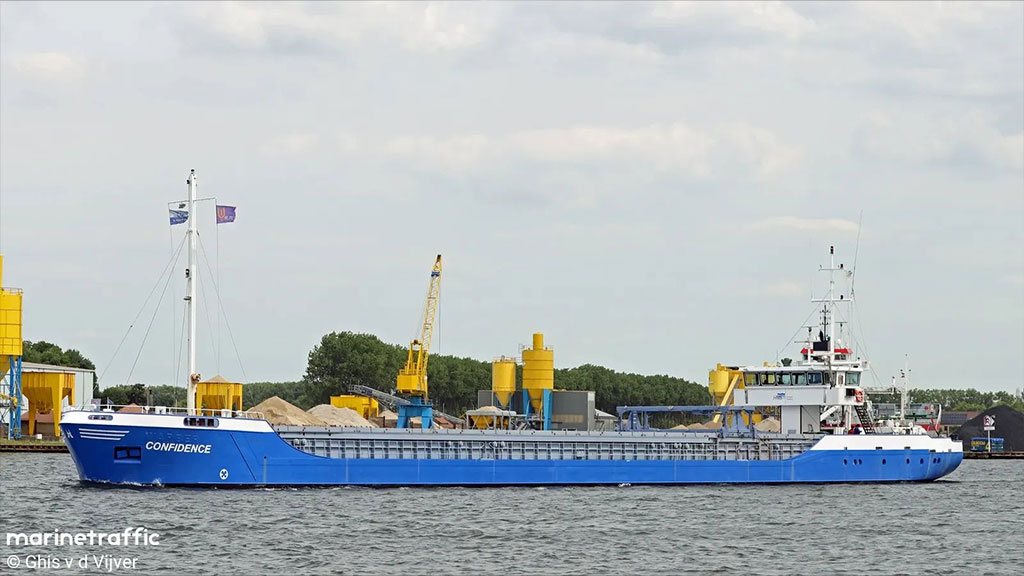
MV Confidence
MV Confidence | General Cargo Ship
nC Protect in practice - Customer Experience – Application of nC Corrosion [...]
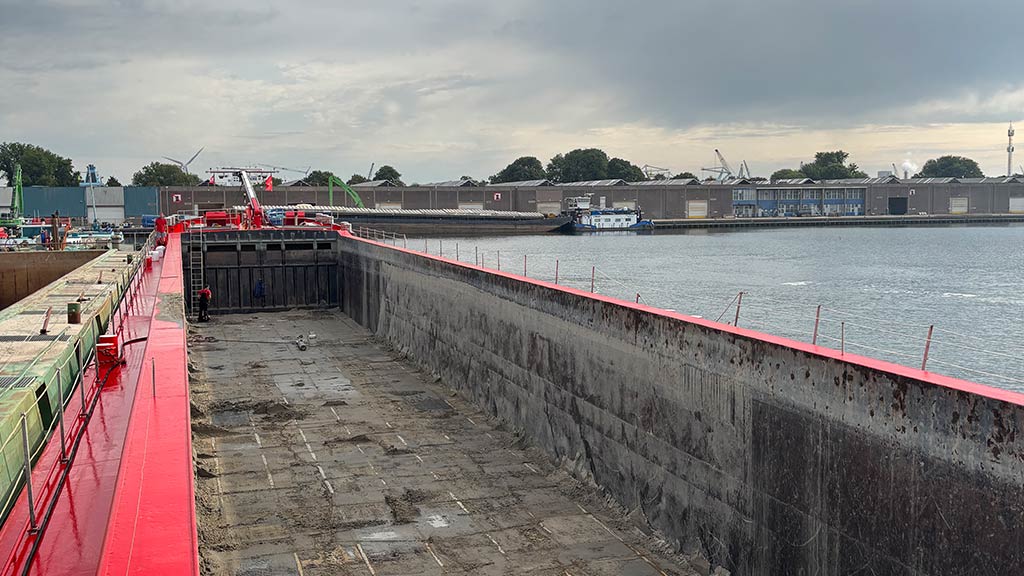
Cargo ship – Application of nC Corrosion Passivator Fluid between hold floor and bottom plating
Cargo ship – application of nC Corrosion Passivator Fluid between hold floor [...]
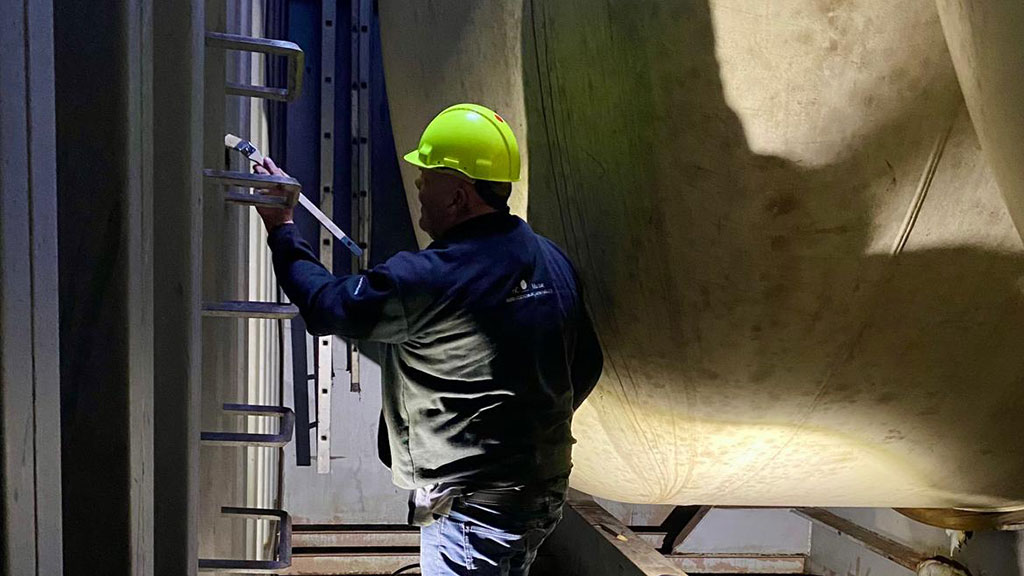
Tank barge | Inland ship
Spot Repair on tank barge with nC Corrosion Passivator Primer 2-in-1
Spot Repair on tank barge with nC Corrosion Passivator Primer 2-in-1 Rust [...]
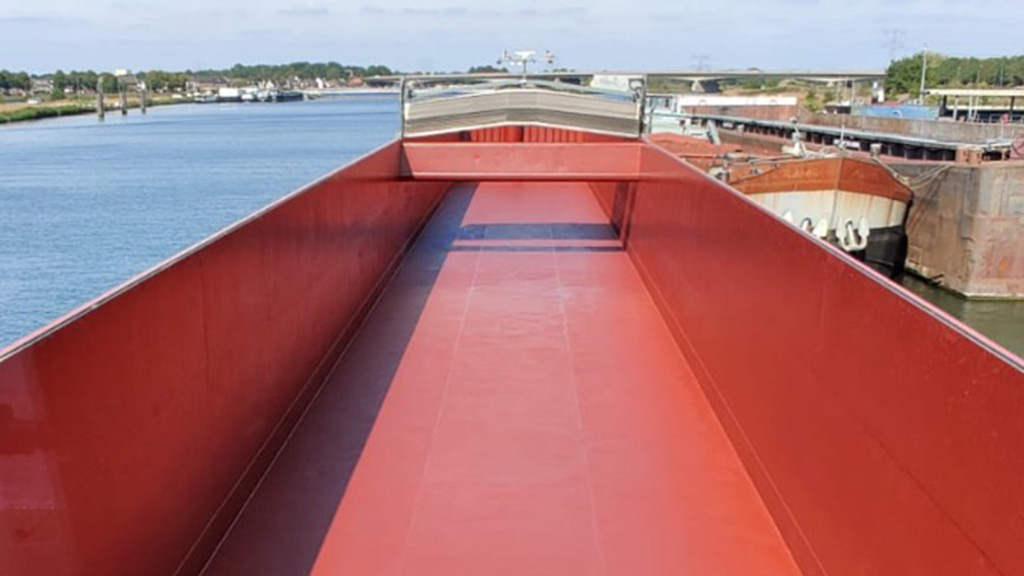
MS Franca | Inland cargo ship
nC Corrosion Passivator applied in cargo hold
nC Protect in practice – nC Corrosion Passivator applied in cargo hold [...]

Dredging company
Treatment of tanks and voids of backhoe dredger with nC Corrosion Passivator Fluid
In Oktober 2024, the internals of a backhoe dredger were treated with [...]

Maritime service provider
Application of a hard coat system to the tanks of a floating sheerleg
During weeks 47-50 of 2024, six voids of a floating sheerleg were [...]

Shipyard
Shipyard Bridge pontoon – Inspection after 2 years
This report outlines the conservation and two-year follow-up inspection of a bridge [...]

Zeesleper Elbe
Conservation of the Historic Ship – Zeesleper Elbe
In March 2024, the tank of the Zeesleper Elbe underwent treatment to [...]

Dredging company
Treatment of splitt hopper barge hull voids with nC Corrosion Passivator Fluid
In December 2024, the voids of a split hopper barge were treated to [...]

Atlas Copco Rentals Netherlands
Corrosion passivation and sealing of generators
Rust developed in several areas of the generator sets. Atlas Copco asked [...]

Rederij Vroon, Netherlands
Passivation and sealing of ventilation shafts
The ventilation shafts of a total of 4 livestock carriers of shipping [...]

Rederij Cement Tankvaart BV
Protect back and front peaks
The aft and for peaks of most of Rederij Cement Tankvaart's cement [...]

Elio Barone, Netherlands
Corrosion passivation waterline
The waterline of the Res Nova from Dordrecht suffers from ever-recurring rust. [...]

De Ruiter Staalkabels BV, Netherlands
Passivation and lubrication of new and used steel cables
De Ruiter Staalkabels BV's non-galvanized/not galvanized steel cables must be lubricated and [...]

Shipping company MSG, Würzburg, Germany
Corrosion passivation peaks and ballast tanks
The ballast tanks of the entire MSG Babetta tugboat of shipping company [...]

Fugro Marine Services, the Netherlands
Passivation and sealing of fresh water tanks
The surfaces of the 4 fresh water tanks of the Fugro Supporter [...]

Bocimar, Belgium
Corrosion passivation and sealing of damp hold floor
The hold floors of the Mineral Honshu must be protected from corrosion. [...]

KMG Rides , Nederland
Ballast tanks passivation of amusement park attractions
Several rides already installed, as well as new construction, are balanced by [...]

Construction company and owner together, the Netherlands
THQ beams passivation
The parking garage in question was constructed using hollow THQ beams (hat [...]

BAM
Protecting and sealing 900m2 of window surface
After installing the glass, it becomes apparent how important clean windows are [...]

Shipping company MSC, Malta
Thermal insulation of steam and condensation pipelines
The steam pipes and condensation pipes of the MSC Clementina F are [...]

Jansen Huybregts Onderhoud Renovatie BV, Nootdorp
Thermal insulation Partition walls
The building "The General" on Gen. Spoorlaan in Rijswijk was converted from [...]

Meerbouw Rotterdam B.V.
Thermal insulation of facade walls
The house was built in 1938 and has no cavity walls. A [...]

Fugro Marine Services
Passivation and conservation of drinking water tanks
Fugro has applied nC Corrosion Passivater and nC Protect sealing coatings to [...]

Hebo Maritiemservice B.V.
Corrosion passivation ballast tanks HEBO Lift 8
In the first week of January, we were at work at HEBO [...]

Shipyard Reimerswaal
Corrosion passivation ballast tanks of bridge pontoon
In 2022, we started the passivation of 400 m3 ballast tanks of [...]

GEFO Shipping Group
Corrosion passivation ballast tanks Schloss Oranienbaum
In October 2020, we treated the ballast tanks of the Schloss Oranienburg [...]

Kotug
Corrosion passivation of tugboat Adriaan
Kotug is a leading towing company offering its services to ports and [...]

Shipping Company Green
Corrosion passivation of ballast water tanks
A series of 4 ships from Rederij Groen, Scheveningen, Netherlands, have undergone [...]

Kooiman Van Os Shipyard
Corrosion Passivation Vistrawler
Shipyard Kooijman Van Os in Yerseke benefited from the floating capabilities of [...]

Tata Steel
Thermal insulation and passivation.
The coal grinding plant including inlet and outlet pipes on top lose heat. [...]